The Paused Deadlift: Why Slowing Down Builds More Strength
Discover why the paused deadlift builds raw strength, improves form, and protects your joints better than speed-focused pulling.
Fit Life 50+ Staff
Fitness and wellness resources for adults over 50
Discover why the paused deadlift builds raw strength, improves form, and protects your joints better than speed-focused pulling.
What Is the Paused Deadlift (And Why It's Not Just for Powerlifters)
The paused deadlift is exactly what it sounds like: you pull the bar off the floor, stop at a specific point in the lift — usually just below or just above the knee — hold for 1 to 3 seconds, then complete the pull. That's it. Simple concept, serious results.
What makes it powerful isn't the pause itself — it's what the pause eliminates. Most lifters use momentum to carry them through their weakest position in the pull. The hitch, the soft knee, the forward collapse of the torso — these all get masked when you're moving fast. A deliberate pause strips that away entirely.
This isn't elite powerlifter territory. Whether you've been deadlifting for twenty years or you're six months into your fitness journey, the paused variation has something to teach you. It exposes weakness, builds real starting strength, and forces your body to own every inch of the movement. That kind of honest training pays dividends at every age and every level.
The Science Behind Pausing: Time Under Tension and Starting Strength
Two physiological mechanisms explain why the paused deadlift works so well: time under tension (TUT) and starting strength development.
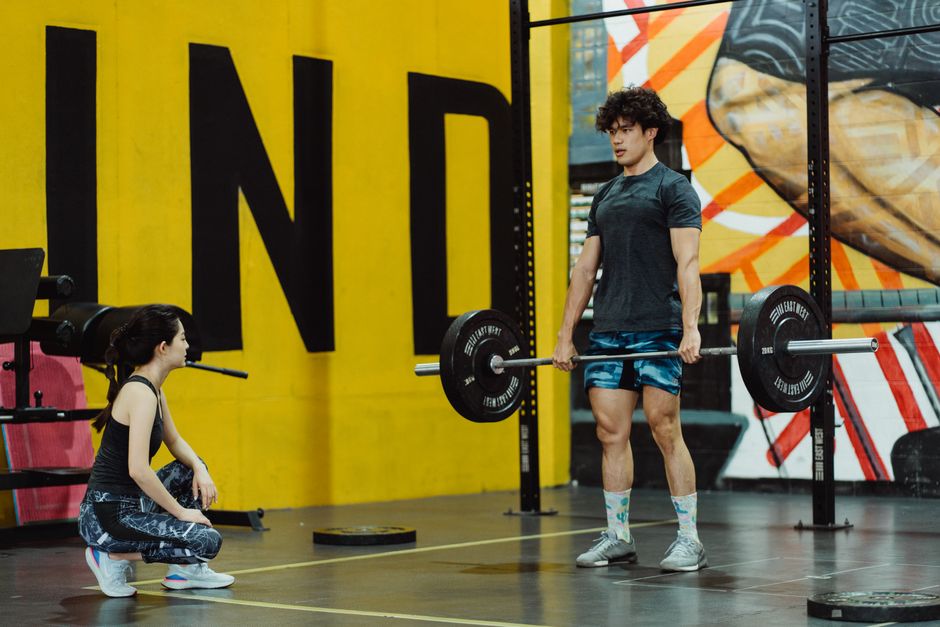
Photo by Ketut Subiyanto on Pexels
Time under tension refers to how long your muscles are under load during a set. Research consistently supports the idea that longer TUT drives greater muscular stimulus — more motor unit recruitment, more mechanical tension, more metabolic stress. When you pause mid-pull for even two seconds per rep, you dramatically increase TUT without adding a single pound to the bar.
Starting strength is your ability to generate force from a dead stop — no elastic energy stored, no momentum borrowed. This is where most lifters are weakest. A conventional deadlift pulled fast can mask poor starting strength through bar whip and timing. The pause kills that advantage and forces your posterior chain — glutes, hamstrings, erectors — to generate force from scratch at the hardest point in the lift.
The result is a more honest, more complete strength stimulus. You get stronger where it actually counts: at the bottom, when the weight is heaviest and the leverage is worst.
Complete Form Breakdown: How to Execute the Paused Deadlift
Setup (identical to your conventional deadlift):
- Bar over mid-foot, roughly 1 inch from shins
- Hip-width stance, toes slightly out
- Hinge at the hips, grip just outside the legs
- Deep breath into the belly — brace your core like you're about to take a punch
- Proud chest, neutral spine, lats locked in (think: protect your armpits)
The Pull: Drive through the floor — don't think "pull," think push the earth away. Maintain a neutral spine as the bar passes your shins.
The Pause: At just below the knee (or just above, depending on your target weakness), stop completely. Hold 1 to 3 seconds. Do not relax. Your brace stays locked, your lats stay tight, your hips don't shift. This is where the work happens.
Breathing during the pause: Hold your breath through the pause — do not exhale mid-hold. Release at lockout or on the controlled descent.
The Lockout: Drive hips through to full extension. Squeeze glutes, stand tall. No hyperextension at the top.
The Descent: Control it. Hinge back at the hips, keep the bar close. Don't just drop it.
Where to Pause and Why It Changes Everything
Not all pause positions are created equal. Where you stop the bar determines which weakness you're targeting — and choosing the right position is what separates a focused training tool from a random variation.
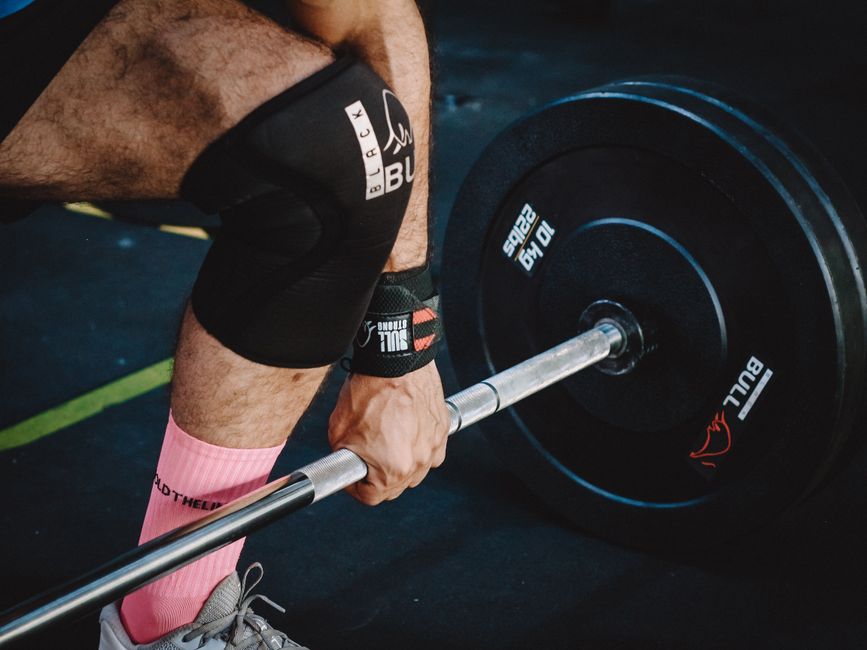
Photo by Geancarlo Peruzzolo on Pexels
Below the knee is the most common pause point. The bar is still close to the body, but your quads are near full extension and your hamstrings are doing heavy work. This position exposes poor hip drive and weak initial leg engagement. If you tend to collapse forward at the start of your pull, pause here.
At the knee is the true sticking point for most lifters. The bar is at its mechanically disadvantaged position relative to your hips. Pausing here forces you to maintain tension in the most demanding transition of the lift — where the bar has to travel around the knee rather than with it.
Above the knee targets the hip hinge lockout. If you struggle to finish pulls or your hips shoot up before your shoulders, pause in this range to reinforce proper sequencing.
For most people, starting below the knee is the right call. Master one position before experimenting with others. Consistent, targeted pauses build more transferable strength than randomly stopping wherever fatigue hits.
Programming the Paused Deadlift: Where It Fits in Your Training
The paused deadlift is a training tool, not a replacement for your main lift — at least not indefinitely. Here's how to use it intelligently.
As an accessory lift: Run paused deadlifts at 60–75% of your conventional max, 3 to 4 sets of 3 to 5 reps. Use them after your primary pull work on deadlift day, or on a separate session if your schedule allows.
As a technique block: Spend 4 to 6 weeks making the paused variation your primary pull at reduced load. This is especially effective when you're coming back from a break, relearning form, or building confidence after an injury. Start conservative — your ego will want to load up; your body will thank you for not doing that.
Progressive overload still applies: Add weight gradually, just like any other lift. If you're pausing 2 seconds per rep for 4 sets of 4 and it feels manageable, add 5 to 10 pounds next week. The pause makes lighter weight harder — respect that.
Recovery consideration: Paused work is neurologically demanding. Don't stack it with heavy squat sessions or expect to pull heavy conventional the next day. Your central nervous system needs recovery just like your muscles do.
Modifications for Every Fitness Level
One of the best things about the paused deadlift is its scalability. The mechanics don't change — just the load, the duration, and the range of motion.
Beginners: Start with a Romanian Deadlift (RDL) pause at mid-shin. This keeps the range of motion controlled and teaches the hinge pattern under tension without the complexity of a full pull from the floor. Use light dumbbells or a trap bar before moving to a barbell.
Intermediate lifters: Use a barbell at 60–65% of your conventional max. Focus on a 2-second pause below the knee. Prioritize feel over load — you should be able to describe what every muscle is doing during the hold.
Experienced lifters: Experiment with pause position (at or above the knee), longer hold durations (3 seconds), and slightly heavier loads (up to 75–80% of max). You can also combine this with a slow eccentric — 3 seconds down, pause, controlled pull.
Mobility limitations: If you can't achieve a neutral spine at full depth, elevate the bar on blocks or use a trap bar. A paused trap bar deadlift from a 2–4 inch elevation is mechanically safer and still delivers all the tension benefits of the standard variation. Form is the non-negotiable here — always.
Conclusion
The paused deadlift doesn't care about your ego, and that's exactly why it works. It forces honesty — from your technique, your positioning, and your true level of strength. Slowing down isn't a step backward; it's one of the smartest investments you can make in long-term pulling power and joint health. Your one actionable takeaway: this week, strip 20% off your deadlift weight and add a 2-second pause below the knee for 3 sets of 4 reps. Feel every inch of that lift. That awareness is the foundation of strength that lasts. Strong today. Strong tomorrow. Strong for life.
Take the Next Step
Put the Knowledge
Into Action
Send a question or use the starter resources to plan your next practical step.