Progressive Overload Without Adding Weight: The Rep Quality Secret
Stuck at the same weight? Learn how tempo, range of motion, and positioning can drive real strength gains without adding a single pound.
Fit Life 50+ Staff
Fitness and wellness resources for adults over 50
Stuck at the same weight? Learn how tempo, range of motion, and positioning can drive real strength gains without adding a single pound.
Why Most Lifters Hit a Wall (And What's Actually Missing)
Most people think progressive overload means one thing: add weight to the bar. When the scale on the dumbbell stops moving, they assume progress has stopped too. It hasn't. Progress has just outgrown their strategy.
Progressive overload is really about increasing the demand placed on your muscles over time. Weight is just one variable. And here's the part that surprises even experienced lifters — it's not always the most effective one.
Research consistently shows that mechanical tension, metabolic stress, and time under tension are the primary drivers of muscle adaptation. None of those require you to touch the weight selector. They require you to become more deliberate about how you perform every single rep.
This matters enormously if you're someone who's been stuck at the same weights for weeks, returning from a break, managing a joint issue, or simply trying to train smarter rather than just harder. The good news? The tools are already in your hands. You just need to know how to use them.
The Tempo Method: Slowing Down to Level Up
Tempo training is one of the most underused and most powerful tools in strength programming. It refers to controlling the speed of each phase of a movement — the lowering phase (eccentric), the pause at the bottom, and the lifting phase (concentric).

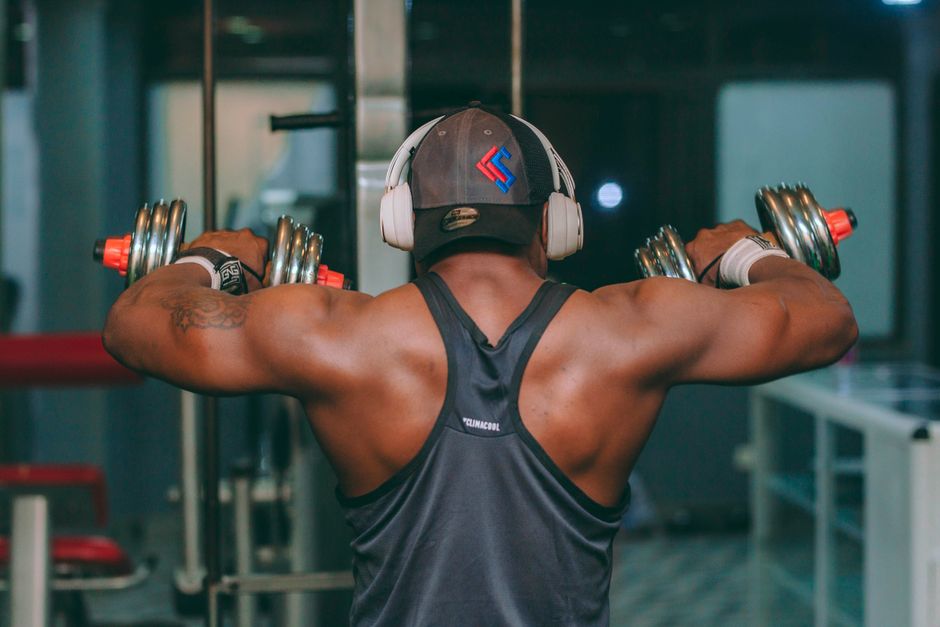
Photo by BİLAL KARADAĞ on Pexels
Here's a simple example. A standard bicep curl might take you two seconds total. Slow the lowering phase to four seconds, pause for two at the bottom, and you've tripled the time your muscle is under tension — using the exact same weight.
Why does this work? The eccentric (lowering) phase is where the muscle sustains the most mechanical stress and where much of the growth stimulus originates. Most people rush through it. That's leaving serious gains on the table.
Try this: On your next set, use a 3-1-2 tempo (3 seconds down, 1 second pause, 2 seconds up). You'll likely need to drop the weight your first time — and that's the point. You're not going easier. You're going deeper.
Breathing note: Inhale during the lowering phase, exhale during the effort. Slow tempo makes this easier to execute correctly.
Range of Motion: The Inches That Change Everything
Full range of motion is one of those principles that gets lip service but rarely gets practiced. Watch any busy gym floor and you'll see partial reps everywhere — squats that barely reach parallel, push-ups that stop six inches above the floor, rows that never fully extend.
Partial reps aren't always wrong. But defaulting to them because the full range is harder? That's just ego lifting in disguise.
Research increasingly supports that training through a full, controlled range of motion produces greater muscle development than partial reps at heavier loads. The muscle is stressed through more of its length, more motor units are recruited, and the mechanical tension is distributed more completely.
Practical application:
- Squats: Aim for at least parallel. If mobility limits you, work on it deliberately.
- Dumbbell chest press: Lower until you feel a genuine stretch across the chest — don't bounce off the bottom.
- Pull-downs or rows: Fully extend at the bottom of each rep before pulling again.
With any movement, reaching full range on the same weight is a legitimate form of progression. It's harder. It should be.
Positioning and Angle: Making Muscles Work Harder Instantly
Small shifts in body position can dramatically change which part of a muscle is working, how hard it's working, and where in the range of motion it's most challenged. This is one of the most overlooked levers in strength training.

Photo by Mustafa Haziroglu on Pexels
Consider the incline dumbbell curl versus a standard curl. Same weight, completely different stimulus — the incline position places the bicep in a stretched state at the bottom, increasing tension precisely where the muscle needs it most.
Or think about foot placement in a split squat. Move your front foot further forward and you bias the glutes and hamstrings. Keep it closer and you load the quads more aggressively. Same exercise, same dumbbells, meaningfully different demand.
Positioning upgrades worth trying:
- Elevate your heels slightly during squats to increase quad recruitment and depth.
- Use a slight forward lean in a split squat to shift more load onto the working glute.
- Perform lateral raises with a slight forward tilt to better target the medial deltoid throughout the full arc.
None of these cost you a pound of added weight. All of them cost you more effort — which is exactly the point.
Putting It Together: A Simple Weekly Progression Plan
The real power here isn't in using one of these methods — it's in understanding that you have a progression system that runs parallel to adding load. Think of it as having multiple dials, not just one.
Here's how a practical four-week progression might look using the same weight throughout:
Week 1: Standard tempo, standard range. Establish your baseline reps.
Week 2: Slow the eccentric to 3-4 seconds on every rep. Notice how much harder the same weight becomes.
Week 3: Add a 1-2 second pause at the most challenging point of the movement (bottom of a squat, chest level on a press, full stretch on a curl).
Week 4: Increase your range of motion by 10-15% and maintain the controlled tempo from weeks two and three.
By the end of week four, you've genuinely progressed — and you likely won't need more weight yet, because the quality of the stimulus has increased substantially. When you do add weight, it will be earned and controlled rather than forced and sloppy.
This is what Longevity Over Ego looks like in practice. Sustainable, deliberate, and built to last.
The Mindset Shift That Makes This Stick
Here's the honest truth: training with controlled tempo, full range of motion, and intentional positioning is harder than grabbing heavier weights and grinding through reps. That's why most people don't do it.
It requires focus. It requires ego management. And it requires trusting that the quality of the stimulus matters more than how impressive the number on the plate looks.
But here's the payoff — this approach builds a foundation that keeps you training for decades. Joints stay healthier because you're not forcing load through compromised mechanics. Muscles develop more completely because you're not skipping the hard parts of the range. And your technique becomes automatic, which means when you do eventually add weight, it lands on a body that's actually prepared for it.
This isn't a workaround for people who can't go heavier. This is the method that elite coaches use with advanced athletes specifically because it works. Age doesn't factor into it. Whether you're 28 or 68, rep quality is the variable that separates people who keep getting results from people who keep wondering why they've plateaued.
The weight will come. Build the quality first.
Conclusion
You don't need heavier weights to make your next workout more effective than your last. Slow down the lowering phase, own the full range of motion, and experiment with positioning — and you'll discover that progressive overload has been hiding in your technique this entire time. Pick one method from this article and apply it deliberately to your very next session. Not next week. Next session. That's your actionable takeaway. Progress doesn't require more weight. It requires more intention. Strong Today... Strong Tomorrow... Strong for Life!
Take the Next Step
Put the Knowledge
Into Action
Send a question or use the starter resources to plan your next practical step.