At-Home Strength Training: Less Than You Think to Build Muscle
You don't need a gym to build real muscle. Discover the science-backed minimum that actually works — and a simple plan to start today.
Fit Life 50+ Staff
Fitness and wellness resources for adults over 50
You don't need a gym to build real muscle. Discover the science-backed minimum that actually works — and a simple plan to start today.
The Gym Isn't the Gatekeeper of Gains
Here's a truth the fitness industry doesn't advertise loudly enough: muscle doesn't know where it's being built. It doesn't care whether you're standing in a chrome-and-mirror gym or your living room. What muscle tissue responds to is mechanical tension, progressive overload, and adequate recovery — none of which require a membership card.

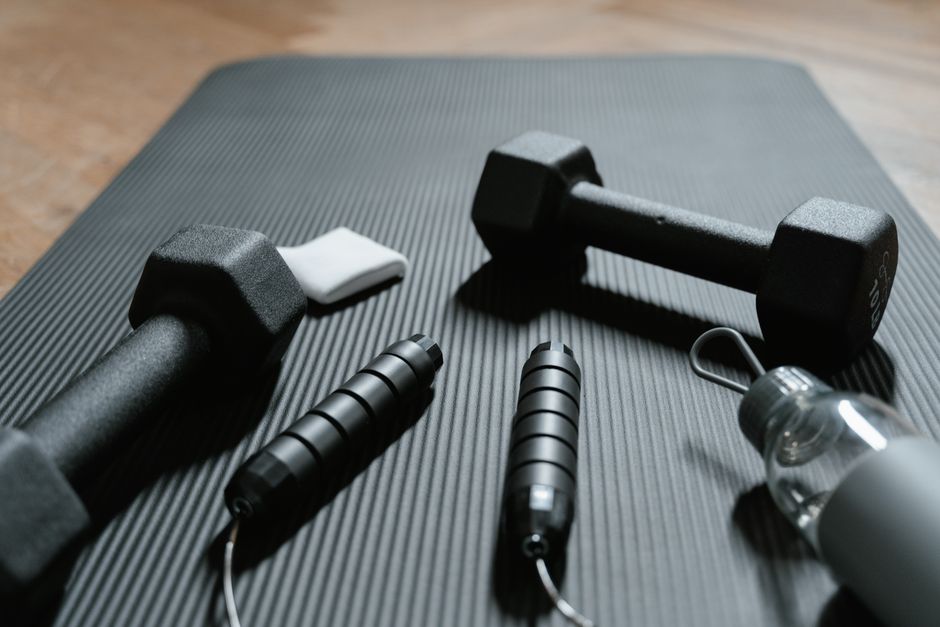
Photo by MART PRODUCTION on Pexels
The viral surge in minimal-equipment training isn't just a trend. It's people discovering what exercise science has supported for decades: compound bodyweight and light-load movements, performed consistently and progressively, produce real, measurable strength and hypertrophy gains.
If you've been waiting for the "right time" to join a gym, or felt like home training was just a placeholder for "real" workouts — this post is your permission slip to stop waiting. The barrier to entry is lower than you've been led to believe, and the results are far more significant than most people expect.
What Muscle Building Actually Requires
Let's strip this down to fundamentals. Research consistently points to three non-negotiable drivers of muscle growth:
1. Mechanical tension — Muscles must be challenged through a meaningful range of motion against resistance. That resistance can be your bodyweight, a resistance band, a single dumbbell, or a loaded backpack.
2. Progressive overload — You must gradually increase the challenge over time. More reps, slower tempo, shorter rest, added load — any of these count. Without progression, adaptation stalls.
3. Sufficient recovery — Muscle is built between sessions, not during them. Sleep, protein intake, and rest days are training variables, not afterthoughts.
Notice what's not on that list: a squat rack, cables, or a lat pulldown machine. Equipment is a tool for applying these principles — not the principle itself. A well-structured home program using two or three resistance bands and your bodyweight can deliver every one of these stimuli with precision.
The Minimum Effective Dose: What the Science Suggests
"Minimum effective dose" is the smallest input that produces the desired output. In strength training, that number is smaller than most people assume.
Current exercise science generally supports that 2 to 3 sessions per week, targeting each major muscle group with 2 to 4 working sets per session, is enough to drive meaningful strength and muscle gains — especially for beginners and intermediate trainees. You don't need to train every day. You don't need hour-long sessions. Research suggests that even 20 to 30 minutes of quality work can be sufficient when the effort level is appropriate.
"Appropriate effort" means working close to — but not always at — muscular failure. That's the key modifier. Volume matters less when intensity is managed well.
This is genuinely good news. Three 25-minute sessions per week is a real, evidence-aligned starting point. That's 75 minutes total. Most people spend longer than that scrolling their phone before bed. The time excuse, while understandable, simply doesn't hold up against the actual minimum required.
A Starter Framework You Can Use This Week
You need a plan, not just motivation. Here's a straightforward 3-day-per-week full-body framework built around fundamental movement patterns:

Photo by Mikhail Nilov on Pexels
Push: Push-up variations (standard, incline, decline, or wall push-ups) Pull: Resistance band rows or door-frame rows Hinge: Romanian deadlifts with bands or a single dumbbell Squat: Goblet squats, split squats, or bodyweight squats with a slow tempo Core: Dead bugs, plank variations, bird dogs
Perform 2–3 sets of 10–15 reps per exercise. Rest 60–90 seconds between sets. Form cues to prioritize: brace your core on every movement, exhale on the exertion phase (the push or pull), and never rush the lowering portion of any rep — that eccentric phase is where much of the growth stimulus lives.
Modifications matter. If a standard push-up isn't accessible today, an incline push-up against a counter is not a lesser exercise — it's the right exercise for where you are right now. Progress is built from your starting point, not someone else's.
How to Keep Getting Stronger Without More Equipment
One of the most common questions once someone commits to home training: "What do I do when it gets too easy?" This is a great problem to have — it means it's working.
Progression at home follows the same logic as the gym, just with different levers:
- Add reps or sets before adding load
- Slow down the tempo — a 3-second lowering phase turns any exercise into a harder version of itself
- Reduce rest time between sets to increase training density
- Advance the exercise variation — from two-leg squats to split squats to single-leg squats
- Add load creatively — a backpack with books, a water jug, or a single adjustable dumbbell covers a surprising amount of ground
This is progressive overload in practice. It doesn't require purchasing another piece of equipment every time you plateau. It requires thinking systematically about which training variable to manipulate next. That skill — learning to read your own training and make smart adjustments — is arguably more valuable than any piece of equipment you could buy.
Consistency Beats Complexity, Every Single Time
The fitness world profits from complexity. Complicated split programs, exotic equipment, and endless supplement stacks create the impression that results require constant investment and expert-level knowledge. That impression is largely manufactured.
What the data actually supports is almost frustratingly simple: people who show up consistently, with decent form and progressive effort, get stronger. Full stop. The program matters far less than the habit.
This is especially important to internalize if you're coming back to training after a long break, dealing with a busy schedule, or navigating the kind of joint considerations that come with decades of living. A "perfect" program you do twice a week beats a "perfect" program you follow for 10 days and abandon.
Start simple. Stay consistent. Adjust as you go. That's the entire framework. The gym can wait — or it can stay right where it is, because you've already built everything you need at home.
Conclusion
Building muscle at home isn't a compromise — it's a legitimate, science-supported path to lasting strength. You don't need more space, more equipment, or more time than you already have. You need a clear starting point, a few sound principles, and the willingness to show up consistently. This week, pick three days, choose one exercise from each movement pattern above, and do two sets of each. That's your minimum viable workout. Do that for four weeks and you'll have something far more valuable than a gym membership — you'll have proof that you can do this.
Take the Next Step
Put the Knowledge
Into Action
Send a question or use the starter resources to plan your next practical step.